Flora & Fauna
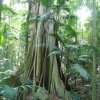
The area is a remnant moist forest complex. It has national significance because the diversity of forest types is representative of that which once extensively covered the Blackall Ranges and the Sunshine Coast.
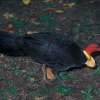
The Conondale avifauna reflects the special diversity of this area. The forest contains over a quarter of Queensland's wildlife, 242 species of birds, including 22 rare and endangered species. Apart from the frogs, significant fauna include the rare Plumed or Marbled Frogmouth, Red Goshawk, Coxen's Fig Parrot, Powerful Owl, Black-breasted Button-quail, Paradise Rifle Bird and the Giant Spiny Lobster. It is considered one of the premium bird watching areas in Queensland both for the number of species as well as accessibility and ease of observation.
It also holds the dubious title of the place of the last reported sighting of the Gastric Brooding Frog and the less-studied but equally disappeared Southern Day Frog - not seen in the Conondales since 1979.
The Gastric Brooding or Platypus Frog was first discovered in 1972 in the Conondales. This remarkable amphibian, only 5cm long, is totally aquatic and the female broods the young in her stomach. The froglets are regurgitated after six weeks - this is not only unique for a frog, its unique for the entire animal kingdom.
Full Bird List - Conondales (242 species)
Compiled from EPA database plus Greg Czechura and Greg Roberts
- Australasian Grebe [Tachybaptus novaehollandiae]
- Australian Hobby [Falco longipennis]
- Azure Kingfisher [Alcedo azurea]
- Baillon’s Crake [Porzana pusilla]
- Banded Lapwing [Vanellus tricolor]
- Barking Owl [Ninox connivens]
- Barn Owl [Tyto alba]
- Barred Cuckoo-shrike [Coracina lineata]
- Bar-shouldered Dove [Geopelia humeralis]
- Bassian Thrush [Zoothera lunulata]
- Bell Miner [Manorina melanophrys]
- Black Bittern [Ixobrychus flavicollis]
- Black Falcon [Falco subniger]
- Black Kite [Milvus migrans]
- Black Swan [Cygnus atratus]
- Black-breasted Button-quail [Turnix melanogaster]
- Black-breasted Buzzard [Hamirostra melanosternon]
- Black-faced Cuckoo-shrike [Coracina novaehollandiae]
- Black-faced Monarch [Monarcha melanopsis]
- Black-fronted Dotterel [Elseyornis melanops]
- Black-necked Stork [Ephippiorhynchus asiaticus]
- Black-sholdered Kite [Elanus axillaris]
- Black-winged Stilt [Himantopus himantopus]
- Blue-faced Honeyeater [Entomyzon cyanotis]
- Brahminy Kite [Haliastur indus]
- Brown Cuckoo-dove [Macropygia amboinensis]
- Brown Falcon [Falco berigora]
- Brown Gerygone [Gerygone mouki]
- Brown Honeyeater [Lichmera indistincta]
- Brown Quail [Coturnix ypsilophora]
- Brown Songlark [Cincloramphus cruralis]
- Brown Thornbill [Acanthiza pusilla]
- Brown Treecreeper [Climacteris picumnus]
- Brown-headed Honeyeater [Melithreptus brevirostris]
- Brush Cuckoo [Cacomantis variolosus]
- Brush-turkey [Alectura lathami]
- Buff-banded Rail [Gallirallus philippensis]
- Buff-rumped Thornbill [Acanthiza reguloides]
- Bush Hen [Amaurornis olivaceus]
- Bush Stone-curlew [Burhinus grallarius]
- Cattle Egret [Ardea ibis]
- Channel-billed Cuckoo [Scythrops novaehollandiae]
- Chesnut Teal [Anas castanea]
- Chesnut Teal [Anas castanea]
- Chestnut-breasted Mannikin [Lonchura castaneothorax]
- Cicadabird [Coracina tenuirostris]
- Clamorous Reed-Warbler [Acrocephalus stentoreus]
- Comb-crested Jacana [Irediparra gallinacea]
- Common Bronzewing [Phaps chalcoptera]
- Common Koel [Eudynamys scolopacea]
- Common myna [Acridotheres tristis]
- Common Starling [Sternus vulgaris]
- Coxen's Fig-parrot [Cyclopsitta diophthalma coxeni]
- Crested Pigeon [Ocyphaps lophotes]
- Crested Shrike-tit [Falcunculus frontatus]
- Crimson Rosella [Platycercus elegans]
- Darter [Anhinga melanogaster]
- Dollarbird [Eurystomus orientalis]
- Double-barred Finch [Taeniopygia bichenovii]
- Dusky Honeyeater [Myzomela obscura]
- Dusky Moorhen [Gallinula tenebrosa]
- Dusky Woodswallow [Artamus cyanopterus]
- Eastern Bristlebird [Dasyornis brachypterus]
- Eastern Spinebill [Acanthorhynchus tenuirostris]
- Eastern Whipbird [Psophodes olivaceus]
- Eastern Yellow Robin [Eopsaltria australis]
- Emerald Dove [Chalcophaps indica]
- Eurasian Coot [Fulica atra]
- Fairy Martin [Hirundo ariel]
- Fan-tailed Cuckoo [Cacomantis flabelliformis]
- Figbird [Sphecotheres viridis]
- Forest Kingfisher [Todiramphus macleayii]
- Fork-tailed Swift [Apus pacificus]
- Fuscous Honeyeater [Lichenostomus fuscus]
- Galah [Eolophus roseicapillus]
- Glossy Black-cockatoo [Calyptorhynchus lathami]
- Glossy Ibis [Plegadis falcinellus]
- Golden Whistler [Pachycephala pectoralis]
- Golden-headed Cisticola [Cisticola exilis]
- Grass Owl [Tyto capensis]
- Great Cormorant [Phalacrocorax carbo]
- Great Crested Grebe [Podiceps cristatus]
- Great Egret [Ardea alba]
- Green Catbird [Ailuroedus crassirostris]
- Grey Butcherbird [Cracticus torquatus]
- Grey Falcon [Falco hypoleucos]
- Grey Fantail [Rhipidura fuliginosa]
- Grey Shrike-thrush [Colluricincla harmonica]
- Grey Teal [Anas gracilis]
- Grey-crowned Babbler [Pomatostomus temporalis]
- Hardhead [Aythya australis]
- Hoary-headed Grebe [Poliocephalus poliocephalus]
- Horsfield’s Bronze-Cuckoo [Chrysococcyx basalis]
- House Sparrow [Passer domesticus]
- Intermediate Egret [Ardea intermedia]
- Jacky Winter [Microeca fascinans]
- King Quail [Coturnix chinensis ]
- King-parrot [Alisterus scapularis]
- Large-billed Scrubwren [Sericornis magnirostris]
- Latham’s Snipe [Gallinago hardwickii]
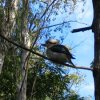
- Laughing Kookaburra [Dacelo novaeguineae]
- Leaden Flycatcher [Myiagra rubecula]
- Letter-winged Kite [Elanus scriptus]
- Lewin’s Rail [Rallus pectoralis]
- Lewin's Honeyeater [Meliphaga lewinii]
- Little Black Cormorant [Phalacrocorax sulcirostris]
- Little Bronze-Cuckoo [Chrysococcyx minutillus]
- Little Button-quail [Turnix velox]
- Little Eagle [Hieraaetus morphnoides]
- Little Egret [Ardea garzetta]
- Little Friarbird [Philemon citreogularis]
- Little Grassbird [Magalurus gramineus]
- Little Lorikeet [Glossopsitta pusilla]
- Little Pied Cormorant [Phalacrocorax melanoleucos]
- Little Shrike-thrush [Colluricincla megarhyncha]
- Little Wattlebird [Anthochaera chrysoptera]
- Logrunner [Orthonyx temminckii]
- Magpie [Gymnorhina tibicen]
- Magpie-lark [Grallina cyanoleuca]
- Marsh Sandpiper [Tringa stagnatilis]
- Masked Lapwing [Vanellus miles ]
- Masked Owl [Tyto novaehollandiae ]
- Masked Woodswallow [Artamus personatus]
- Mistletoebird [Dicaeum hirundinaceum]
- Musk Lorikeet [Glossopsitta concinna]
- Nankeen Kestrel [Falco cenchroides]
- Nankeen Night Heron [Nycticorax caledonicus]
- New Holland Honeyeater [Phylidonyris novaehollandiae]
- Noisy Friarbird [Philemon corniculatus]
- Noisy Miner [Manorina melanocephala]
- Noisy Pitta [Pitta versicolor]
- Olive-backed Oriole [Oriolus sagittatus]
- Oriental Cuckoo [Cuculus saturatus]
- Osprey [Pandion haliaetus]
- Owlet-nightjar [Aegotheles cristatus]
- Pacific Black Duck [Anas superciliosa]
- Painted Button-quail [Turnix varia]
- Painted Snipe [Rostratula benghalensis]
- Pale-headed Rosella [Platycercus adscitus]
- Pale-yellow Robin [Tregellasia capito]
- Pallid Cuckoo [Cuculus pallidus]
- Paradise Riflebird [Ptiloris paradiseus]
- Peaceful Dove [Geopelia placida]
- Pelican [Pelecanus conspicillatus]
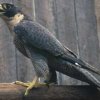
- Peregrine Falcon [Falco peregrinus]
- Pheasant Coucal [Centropus phasianinus]
- Pied Butcherbird [Cracticus nigrogularis]
- Pied Cormorant [Phalacrocorax varius]
- Pied Currawong [Strepera graculina]
- Plumed Frogmouth [Podargus ocellatus plumiferus]
- Plumed Whistle-Duck [Dendrocygna eytoni]
- Powerful Owl [Ninox strenua]
- Purple Swamphen [Porphyrio porphyrio]
- Rainbow Bee-eater [Merops ornatus]
- Rainbow Lorikeet [Trichoglossus haematodus ]
- Red Goshawk [Erythrotriorchis radiatus]
- Red-backed Button-quail [Turnix maculosa]
- Red-backed Fairy-wren [Malurus melanocephalus]
- Red-browed Finch [Neochmia temporalis]
- Red-browed Treecreeper [Climacteris erythrops]
- Red-chested Button-quail [Turnix pyrrhothorax]
- Red-kneed Dotterel [Erythrogonys cinctus]
- Red-tailed Black-cockatoo [Calyptorhynchus banksii]
- Regent Bowerbird [Sericulus chrysocephalus]
- Restless Flycatcher [Myiagra inquieta]
- Richard’s Pipit [Anthus novaeseelandiae]
- Rose Robin [Petroica rosea]
- Rose-crowned Fruit-dove [Ptilinopus regina]
- Royal Spoonbill [Platalea regia]
- Rufous Fantail [Rhipidura rufifrons]
- Rufous Songlark [Cincloramphus mathewsi]
- Rufous Whistler [Pachycephala rufiventris]
- Russet-tailed Thrush [Zoothera heinei]
- Sacred Kingfisher [Todiramphus sanctus]
- Satin Bowerbird [Ptilonorhynchus violaceus]
- Satin Flycatcher [Myiagra cyanoleuca]
- Scaly-breasted Lorikeet [Trichoglossus chlorolepidotus]
- Scarlet Honeyeater [Myzomela sanguinolenta]
- Scarlet Robin [Petroica multicolor]
- Sharp-tailed Sandpiper [Calidris acuminata]
- Shining Bronze-Cuckoo [Chrysococcyx lucidus]
- Silvereye [Zosterops lateralis]
- Singing Bushlark [Mirafra javanica]
- Sooty Owl [Tyto tenebricosa]
- Southern Boobook [Ninox novaeseelandiae]
- Spangled Drongo [Dicrurus bracteatus]
- Speckled Warbler [Chthonicola sagittata]
- Spectacled Monarch [Monarcha trivirgatus]
- Spotless Crake [Porzana tabuensis]
- Spotted Crake [Porzana fluminea]
- Spotted Pardalote [Pardalotus punctatus]
- Spotted Quail-thrush [Cinclosoma punctatum]
- Square-tailed Kite [Lophoictinia isura]
- Straw-necked Ibis [Threskiornis spinicollis]
- Striated Pardalote [Pardalotus striatus]
- Striated Thornbill [Acanthiza lineata]
- Striped Honeyeater [Plectrorhyncha lanceolata]
- Stubble Quail [Coturnix pectoralis]
- Sulphur-crested Cockatoo [Cacatua galerita]
- Superb Fruit-dove [Ptilinopus superbus]
- Tawny Frogmouth [Podargus strigoides]
- Tawny Grassbird [Megalurus timoriensis]
- Topknot Pigeon [Lopholaimus antarcticus]
- Torresian Crow [Corvus orru]
- Tree Martin [Hirundo nigricans]
- Varied Sitella [Daphoenositta chrysoptera]
- Varied Triller [Lalage leucomela]
- Variegated Fairy-wren [Malurus lamberti]
- Wandering Whistle-Duck [Dendrocygna arcuata]
- Weebill [Smicrornis brevirostris]
- Welcome Swallow [Hirundo neoxena]
- Whiskered Tern [Chlidonias hybridus]
- Whistling Kite [Haliastur sphenurus]
- White Ibis [Threskiornis molucca]
- White-backed Swallow [Cheramoeca leucosternus]
- White-bellied Cuckoo-shrike [Coracina papuensis]
- White-bellied Sea-Eagle [Haliaeetus leucogaster]
- White-breasted Woodswallow [Artamus leucorynchus]
- White-browed Scrubwren [Sericornis frontalis]
- White-browed Woodswallow [Artamus superciliosus]
- White-eared Monarch [Monarcha leucotis]
- White-faced Heron [Egretta novaehollandiae]
- White-headed Pigeon [Columba leucomela]
- White-naped Honeyeater [Melithreptus lunatus]
- White-necked Heron [Ardea pacifica]
- White-throated Gerygone [Gerygone olivacea]
- White-throated Honeyeater [Melithreptus albogularis ]
- White-throated Needletail [Hirundapus caudacutus]
- White-throated Treecreeper [Cormobates leucophaeus]
- White-winged Triller [Lalage sueurii]
- Willie Wagtail [Rhipidura leucophrys]
- Wompoo Fruit-dove [Ptilinopus magnificus]
- Wonga Pigeon [Leucosarcia melanoleuca]
- Wood Duck [Chenonetta jubata]
- Yellow Thornbill [Acanthiza nana]
- Yellow-billed Spoonbill [Platalea flavicollis]
- Yellow-faced Honeyeater [Lichenostomus chrysops]
- Yellow-rumped Thornbill [Acanthiza chrysorrhoa]
- Yellow-tailed Black-cockatoo [Calyptorhynchus funereus]
- Yellow-throated Scrubwren [Sericornis citreogularis]
- Yellow-tufted Honeyeater [Lichenostomus melanops]
- Yellow-tufted Honeyeater [Lichenostomus melanops]
Rare & Endangered Species of the Conondale Range
- Spiny Lobster [Eusastacus hystricosus]
- Green Ground Beetle [Castlenaudia porphyriacus]
- Giant Local Snail [Hedleyella maconelli]
- Marbled Frogmouth [Podargus ocellams plumiferus]
- Double Eyed Fig Parrot [Opopsitta diopthalma coxen]
- Red Goshawk [Accipiter radiatus]
- Black Breasted Button Quail [Turnix melanogaster]
- Sooty Owl [Tyro tenebricosa]
- Powerful Owl [Ninox strenua]
- Glossy Black Cockatoo [Calyptorhynchus lathami]
- Oriental Cockatoo [Cuculus saturatus]
- Yellow-bellied Glider [Petaurus australis]
- Peregrine Falcon [Falco peregrinus]
- Yellow-eyed Cuckoo Shrike [Coracina lineata]
- Paradise Riflebird [Ptiloris paradiscus]
- Eastern Bristlebird [Dasyornis brachypteris]
- Stephens Banded Snake [Hoplocephalus stephensi]
- Lungfish [Neoceratodus forsteri]
- Cascade Tree Frog [Litoria pearsoniana]
- Platypus Frog [Rheabatrachus silus]
- Southern Day Frog [Taudactylus diurnis]
- Marsupial Frog [Assa darlingtoni]
Fauna Common To The Area
Some of the fauna you are likely to see in the Charlie Moreland Recreation Park on a fauna watching expedition.
Birds
- Brush-turkey
- King Parrot
- Magpie
- Bell Miner
- Black-faced Monarch
- Black-faced Cuckoo-shrike
- Brown Cuckoo-Dove
- Brown Gerygone
- Brown Thornbill
- Brush Cuckoo
- Crested Shrike-tit
- Crimson Rosella
- Dollarbird
- Dusky Moorhen
- Eastern Whipbird
- Eastern Yellow Robin
- Fan-tailed Cuckoo
- Figbird
- Golden Whistler
- Green Catbird
- Grey Fantail
- Grey Shrike-thrush
- Koel
- Large-billed Scrubwren
- Laughing Kookaburra
- Leaden Flycatcher
- Lewin's Honeyeater
- Little Lorikeet
- Magpie-lark
- Mistletoebird
- Noisy Friarbird
- Noisy miner
- Olive-backed Oriole
- Pale-headed Rosella
- Paradise Riflebird
- Pied Butcherbird
- Pied Currawong
- Rainbow Lorikeet
- Red-browed Finch
- Regent Bowerbird
- Restless Flycatcher
- Rose-crowned Fruit-Dove
- Royal Spoonbill
- Rufous Fantail
- Russet-tailed Thrush
- Sacred Kingfisher
- Satin Bowerbird
- Scaly-breasted Lorikeet
- Scarlet Honeyeater
- Silvereye
- Southern Boobook
- Spangled Drongo
- Spectacled Monarch
- Sulphur-crested Cockatoo
- Torresian Crow
- Variegated Fairy-wren
- White-browed Scrubwren
- White-faced Heron
- White-throated Gerygone
- Willie Wagtail
- Wompoo Fruit-Dove
- Wonga Pigeon
- Yellow-faced Honeyeater
Butterflies
- Cabbage white
- Glasswing
- Large grass-yellow
- Monarch
- Yellow Albatross
Frogs
- Cane Toad
- Leseur's Frog [Litoria lesueur]
- Mountain Stream Tree Frog [Litoria pearsoniana]
- Peron's Tree Frog [Litoria peronii]
Mammals
- Common Brushtail Possum
- Long-nosed Bandicoot
- Red Deer
Reptiles
- Carpet Python
- Lace Monitor
Insects
- Stingless Bee [Trigona carbonaria]
Much of this list has been provided by Faunawatch, a fauna monitoring project on the Sunshine Coast sponsored by Caloundra Branch of the Wildlife Preservation Society of Queensland. It relies on volunteers to report on the fauna in their area. Contact Keith and Teresa Hickman at email: This email address is being protected from spambots. You need JavaScript enabled to view it. for information and how to get involved.
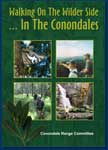
More detailed information on the flora and fauna present in the area, and articles written by field experts, is available in - 'Walking on the Wilder Side' the latest publication by the Conondale Range Committee.